
Port Expansion and Economic Renaissance: The Story of Somaliland’s Berbera Port
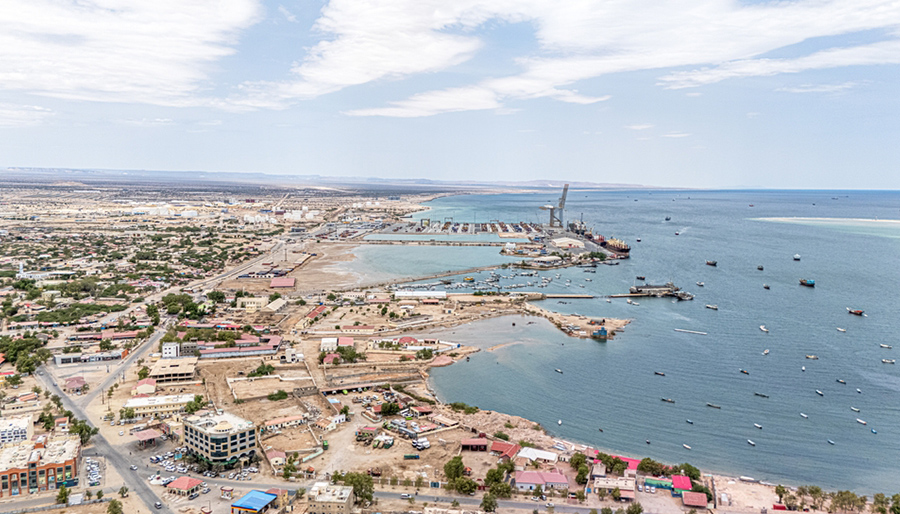
Investment in the expansion of Berbera Port is not just about logistics; it’s a significant chapter in Somaliland’s economic narrative. A recent independent evaluation highlights how upgrades to this crucial port have not only enhanced trade capacity but also bolstered the region’s socio-economic landscape. Conducted by Itad and Steward Redqueen, this assessment was commissioned by British International Investment (BII) and underscores the value of strategic infrastructure investments.
A Strategic Gem in the Gulf of Aden
Berbera is strategically located on the Gulf of Aden, serving as a pivotal node along one of the globe’s busiest shipping routes. For years, it has been considered a potential trade alternative for landlocked Ethiopia. The report reveals that targeted investments in port infrastructure have significantly elevated Berbera’s operational competence, allowing it to contend with established ports in the region.
In collaboration with DP World and the Government of Somaliland, Berbera’s capacity has surged, making it an appealing hub for shipping and logistics in East Africa.
Transformative Infrastructure Developments
The data is compelling: container handling capacity at Berbera has skyrocketed from 150,000 to 500,000 twenty-foot equivalent units (TEUs). This remarkable growth is backed by substantial infrastructural advancements, including new quay facilities and modern cargo-handling equipment. These enhancements allow the port to receive larger vessels and handle increased traffic efficiently.
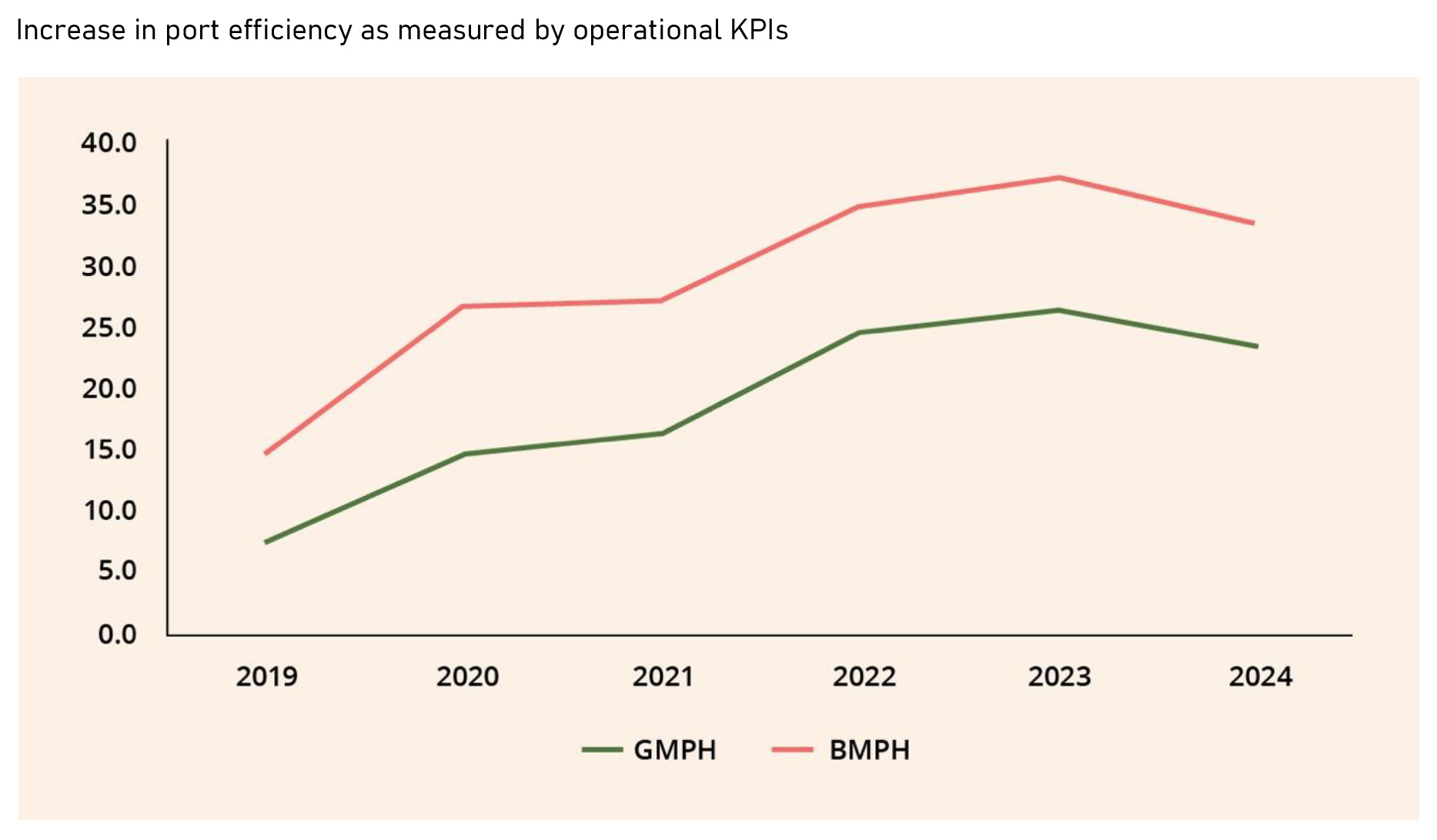
Operational efficiency has also seen a marked improvement. The average vessel turnaround time has dropped dramatically from 64 hours in 2018 to a mere 25 hours in 2024. Such efficiency reduces costs for shipping lines and cargo stakeholders, making Berbera a formidable competitor in the regional logistics arena.
Rising Regional Influence
As a result of these substantial improvements, Berbera’s share of regional container trade has climbed steadily, reaching 14% in 2024—up from just 9% in 2017. This uptick illustrates that the port now presents a cost-effective alternative for regions of eastern Ethiopia and Somaliland that once faced logistical challenges, particularly outside the densely trafficked Addis Ababa–Djibouti corridor.
Economic and Societal Impact
The benefits of the expanded port extend beyond mere statistics; they translate into real savings for businesses operating in the region. The report estimates that by 2024, the reduction in transport costs for importers and exporters utilizing Berbera reached approximately $8.4 million, equating to $6.9 million when factoring in newly attracted users.
Moreover, environmental advantages have emerged from enhanced logistics. With shorter vessel waiting times, carbon emissions have been reduced by an estimated 7,651 tonnes annually. This is a noteworthy development in a world increasingly focused on sustainability.
In addition to environmental benefits, the economic ripple effect is significant. The upgraded port and the adjacent Berbera Economic Zone are estimated to support roughly 2,490 jobs and contribute $45.1 million to Somaliland’s economy in 2024. Of this total, around 921 jobs and $16.7 million output can be directly attributed to the port’s expansion, influencing about 0.4% of Somaliland’s gross domestic product.
The Road Ahead
While the current impacts are encouraging, the full extent of this investment’s benefits has yet to unfold. The evaluation notes that existing trade volumes are not yet fully tapping into the port’s enhanced capacity. Furthermore, disruptions related to regional crises, particularly in the Red Sea, have had repercussions on shipping patterns.
Some benefits, such as the potential impacts of more affordable imports on living standards or broader economic spillovers into neighboring Ethiopia, may not be entirely captured in this study. Nevertheless, the evaluation underscores the potential of well-structured infrastructure investments in underserved markets, particularly when partnered with global operators and robust logistics ecosystems.
In essence, Berbera Port stands as a beacon of hope and opportunity in the Horn of Africa, showcasing how strategic investments can lead to lasting benefits in trade, economics, and environmental stewardship.